 Have you ever picked up a history book and just could not put it down? Even though you were familiar with that part of history, did that book bring so much information that you have never considered before? This is how I felt about The Unbound Scriptures.
History is long gone, especially 1611 England. Over the years, many have assumed certain things to be true of the King James translation. Without clear, historical documentation, many things were just assumed or misunderstood. Since true historical facts require documentation, it is absolutely critical to find those documents. Without the documents, historical revisionism creeps into our understanding.
Rick Norris shows a commitment to historical accuracy in his book, The Unbound Scriptures. The amount of sources he used is staggering. I would love to see his library. Norris includes well-known people and lesser known. His research is wide-ranging.
While the book has an encyclopedic feel to it, it is very readable. He provides prolific quotations throughout the text. There is no need for you to flip to the end of the chapter to read endnotes or glance up and down the page to see footnotes. Each point is sufficiently illustrated and proven with direct quotations from the source. In cases where there are open questions, Rick gives both sides of the argument.
This is not a book that you will leave on your shelf once you read it. You will revisit it over and over as an encyclopedic resource.
The King James Only idea is certainly controversial. It morphs with every generation. The book keeps pace with the current arguments and simply brings forth quotes of those who lived during the times of the translation, those who fought the Bible translation battles in the past and today’s voices. This is a must add to your library.
How do you get a copy?
Here is the ordering information:
The regular price for one copy of book The Unbound Scriptures–$18.00 plus $3.00 for shipping and handling and plus 7% sales tax for North Carolina residents. Shipping to foreign countries is more than $3.00. Future postage increases by the post office may result in higher shipping costs. Contact the author at the following email address: rick1560@juno.com or by mail at Rick Norris, 508 Westminster Drive, Statesville, NC 28677
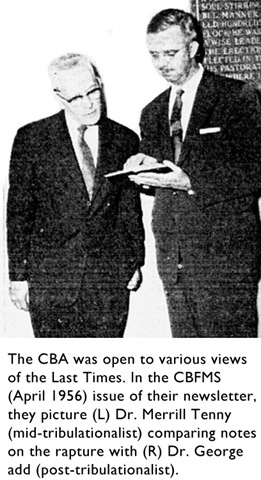 The first controversy centered around the doctrine of the Last Things. The CBF men desired a more narrow confession that included a statement on premillinealism. That is the belief that Christ will return before the millennium to take his saints (Rev 3.10, 1Th 5, Mt 24). Later, this doctrine was more correctly named as “pretribulationalism.”
 W.B. Riley
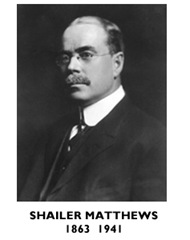 Of the seven Baptist universities, only two would present themselves as orthodox. The University of Chicago (Divinity School) was the first to be recognized as a liberal university. “Shailer Matthews [president of the University of Chicago], in his ‘New Faith for OId’ gave the impression that the University, and particularly the Divinity School, was openly liberal from the very beginning in 1892.”
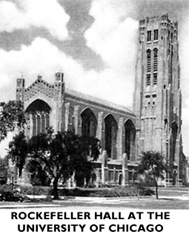 The Rockefellers were members of the Park Street Baptist Church in New York. They were very generous in their giving to the schools. A large pledge by Rockefeller was used to begin the University of Chicago. Nearly every Baptist school in the North received a gift from the Rockefellers.
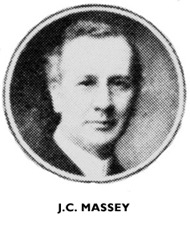 At the pre-convention meeting, the fundamentalists determined that J.C. Massee handle the floor at the Convention. The Fundamentalists wanted to “sell The Baptist” a liberal magazine. Since the magazine was losing money and discouraged Modernists would likely side with the Fundamentalists on the issue, it was a flawless strategy, so it seemed.